

Christ is Risen!
A sermon preached in Christ Church Cathedral in Oxford on Easter Day.

The readings for the Easter Day were Acts 10.34-43; Colossians 3.1-4; and John 20.1-18. The sermon focusses on Peter’s opening words in the passage from Acts, exploring the consequences of the resurrection of Christ for the whole world: “I truly understand that God shows no partiality….”
Prefer audio? Listen to Bishop Steven’s podcast on Spotify.
A few weeks ago, the Dean and I were both present in Canterbury Cathedral for the installation of our new Archbishop. It was a joy and privilege to be there on an historic occasion. Everyone present was moved by the sense that we are a global church, drawn from many different nations across the Anglican communion and from our sister churches.
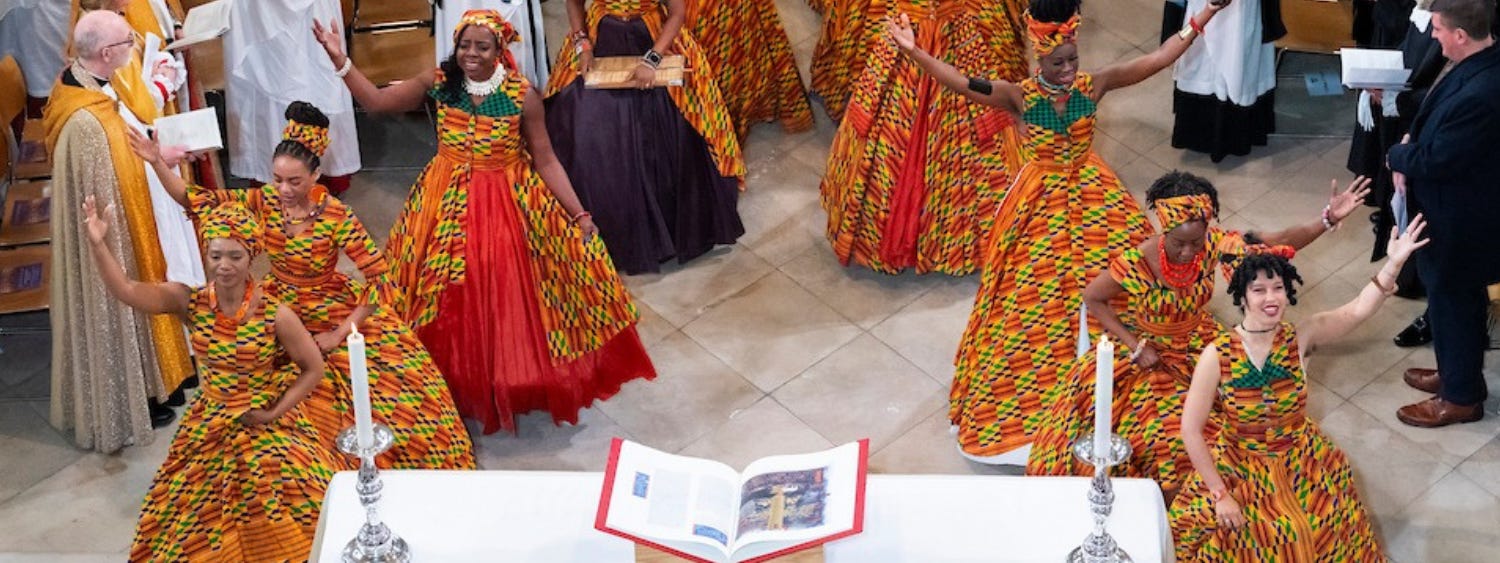
There was a wonderful African choir from Norfolk of all places who sang the Gospel Acclamation and danced through the aisles. The Gospel was read in Spanish by the new Archbishop of Mexico. Bishops had gathered from every continent. Each of us were encouraged to say the Lord’s prayer in our own mother tongue. We were a remarkable global community that day of 2000 Christians representing this fragile, fractured world and bearing witness to the resurrection. Many more were watching across the world online.
So, it is sobering this morning to return to the first Easter, to the garden, to Mary: the first witness and apostle. The Church does not arrive fully formed as the global community she is today. The Church begins with this single encounter as Mary comes looking to anoint the body of Jesus her friend. The Church begins with the evidence of the empty tomb, the linen wrappings folded and set aside, a woman’s tears. The Church begins with the risen Jesus, bearing still the wounds of his crucifixion, speaking the name of a single disciple and calling her into life: Mary. The Church begins with the power of resurrection: the power of death is broken for all people and for ever.
Mary runs to announce the resurrection to the tiny community of disciples. They in turn tell others. On the Day of Pentecost three thousand are baptised from every nation in the known world. New churches are planted across Europe, the Middle East, India and Africa. The early Church, guided by the Spirit, then comes to a profound awakening that the Christian faith is not for one nation only but for all the world: a universal faith. The Church is called to be one Body of Christ, a community drawn from every nation, and so it has become: frustrating, imperfect but global. Today from this one encounter in the Garden, a third of the world’s population is Christian: 2.6 billion people and still growing. This global Church begins in the Garden on Easter Day as the risen Christ calls her name: Mary.
Mary tells Peter to good news. Then Peter the Apostle with the early Church travels a long and difficult road to unpack and understand all the consequences of the resurrection. Peter is formed deeply by his understanding of Judaism. He wants to reserve membership of the Church to those who keep the Jewish law. But the Holy Spirit demonstrates to him that people from every nation are called to be part of this new community through grace. The Spirit calls Peter to take the gospel to the household of Cornelius, a Roman Centurion.
In the household of Cornelius, it is Peter who is converted. The resurrection of Jesus leads Peter and leads us always to a wider, deeper, richer view of God and God’s purposes. These are Peter’s words in our first reading, words the world needs to hear in this moment. They are some of most important words in the New Testament.
I truly understand that God shows no partiality. I truly understand that God shows no partiality. God has no favourites among the nations. God views every race and nation equally.
The world needs to hear Peter’s words this Easter Day. Because our world is shaped and fractured at present by the very opposite view. All the kingdoms of the ancient world were rested on the notion that one race or another was superior: that God is partial. All the Empires of the nineteenth century and the all the terrible wars of the twentieth century flowed from the very notion that God does have favourites. The wars of the twenty first century are no different.
As a Diocese we have links to Nandyal in India, to Kimberley and Kuruman in South Africa and to Jamaica in the West Indies. We rejoice in those links. But the deep structures of those nations are shaped still by sense of entitlement from the age of Empire; by apartheid; by the transatlantic slave trade – all resting on the notion that God has a favourite race or nation a notion at times, sadly, supported by the Church.
Closer to the present day, the Russian invasion of Ukraine rests on the idea that Ukraine’s destiny is to be a subservient part of greater and superior Russia. The terrible conflicts in the Middle East rest on the deep seated notion that one party or the other has God on their side: in other words that that God does show partiality. The United States is at risk of embracing a new imperialism, imposing its will by force on other nations without respect to international law and resting in part on the belief that God shows partiality and might is right.
Peter and Mary discovered and we discover, that belief in the resurrection of Jesus is not only a matter of personal faith, forgiveness and new life. The resurrection of Jesus is for the whole world. Belief in the resurrection has to change our entire view of the world, our entire view of history. God has no partiality. God has no favourites. God has formed one new people, the Church, the Body of Christ, from every nation across the earth.
The Church is called to challenge partiality and prejudice in all its forms, because of the resurrection of Jesus. The mission of the Church, our witness to the resurrection, is to call out evil and work for peace at home and across the world. We need to be vigilant that the Christian faith does not become the servant of any political ideology, especially one which promotes the superiority of a particular race or nation. We need to be clear that our Christian symbols support and build justice and peace and the community of nations. Because Christ is risen and calls all people to himself.
And how should we ourselves live in the light of this resurrection? How should we live in the 24 hour barrage of hard and difficult news? We are to draw strength from the resurrection. We are called be Easter people, confident in the hope and joy of resurrection. Willing to witness for our faith to all the world. Singing a different song.
St Paul writes:
“Set your minds on things that are above, not on things that are on earth. For you have died and your life is hidden with Christ in God.”
Dear friends, whenever you are anxious, whenever you are afraid, whenever you are cast down by world events or global problems, remember that we are Easter people. Set your minds on things above; draw hope from the resurrection of Christ, from the joy that Christ is making all things new; that all manner of things shall be well.
Easter is a season not a single day. We have travelled with Christ in the wilderness for forty days. We now have fifty days to sing the song of resurrection; to return to each of the resurrection appearances; to allow the hope and joy of Easter to penetrate to the core of our being; to find strength and courage to witness in God’s world.
Christ is risen. God has no favourites. We are called to work for peace, for justice, for the unity of God’s world and set our minds on things that are above this day and every day. Amen.